


Microsoft Collaboration - where are we heading? In this article, I would like to present my personal view of things. I would be delighted to receive feedback on whether or not you share my opinion and how you see the future of collaboration.
Sharepoint
For years, SharePoint was the sole king when it came to modern collaboration with Microsoft technology. SharePoint offers many of the important enterprise features that companies want. The centralized creation, use and storage of documents, lists, processes, structures, metadata, search, calendars, tasks and more.
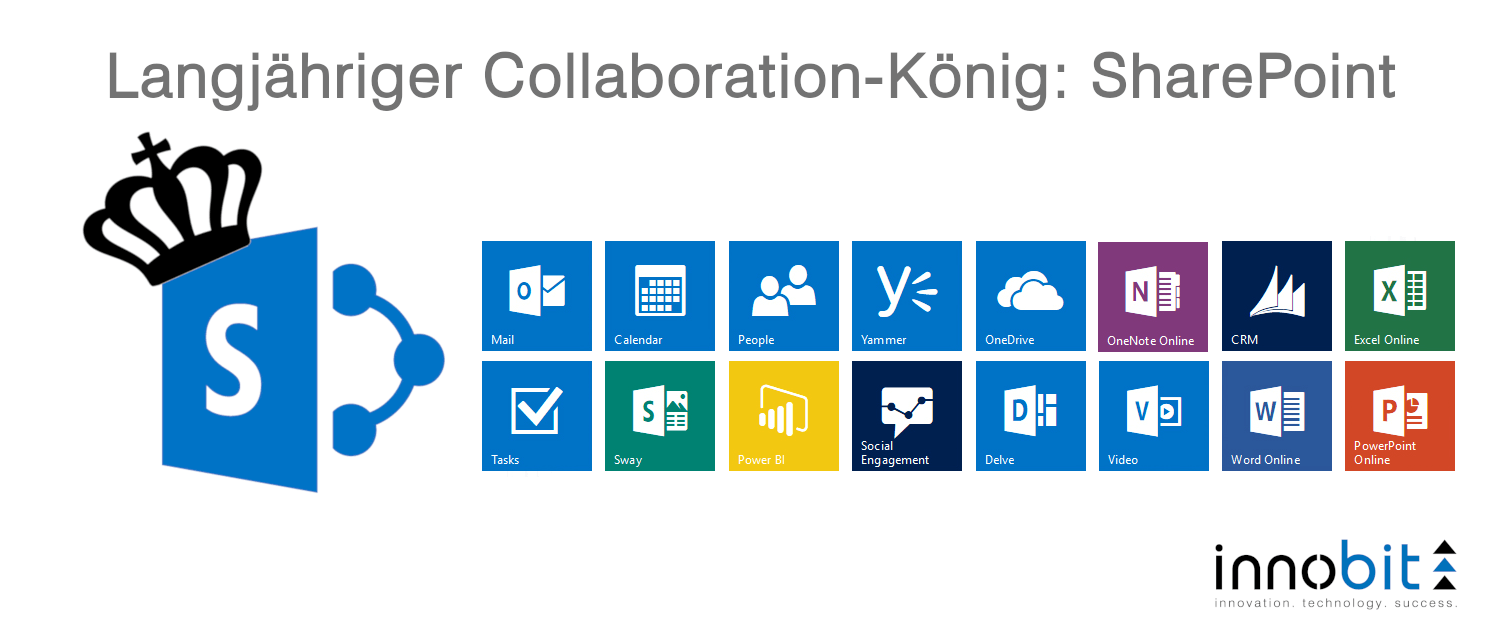
But is the use of SharePoint (whether online or on-premises) also "sexy" for the user, especially for users from the consumer environment who are spoiled with simple handling?
- Moderate is my spontaneous answer! Especially when we refer to SharePoint Classic. The whole experience and handling are rather difficult to get used to, not very simple and also rather sluggish and unnecessarily complex.
- Good (school grade 5 in Switzerland), if we are referring to SharePoint Modern . In addition to a facelift and responsive design (good presentation on all display sizes), Microsoft has also greatly improved the user experience (i.e. usability) and done a good job by simplifying the interface.
If you don't know much about the difference between "classic" and "modern" in the context of SharePoint, the following article from Microsoft on SharePoint classic and modern experiences is sure to help.
But is it really "sexy"?
Microsoft Teams
Microsoft has had its new top horse in the collaboration stable for two years: Microsoft Teams. Slack Technologies, a company with the product of the same name Slack, which was born in Vancouver in 2009 and went public just a few weeks ago, has brought movement to the market. The company currently has a market capitalization of over USD 20 billion. Slack has shown that employees also appreciate mobile, easy-to-use collaboration and that it can also be really "sexy".
Microsoft Teams not only combines all the important elements for collaboration in a central interface (tasks, documents, notes, etc.) but also offers everything that is of central importance for communication: conversation (chat, voice), conferencing and more.
And the Microsoft Teams mobile client is also appealing and has now earned the label "sexy" from the user's point of view.
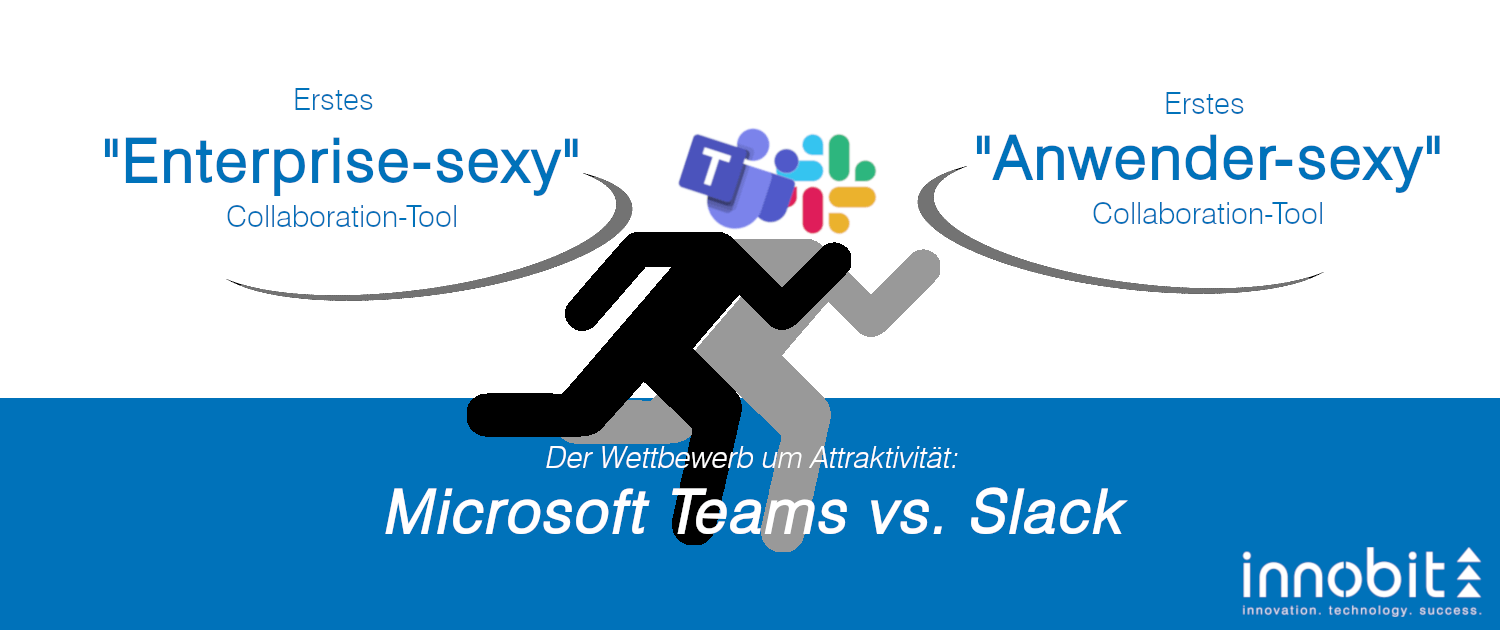
Not only that, but unlike Slack, Microsoft Teams is also "enterprise sexy".
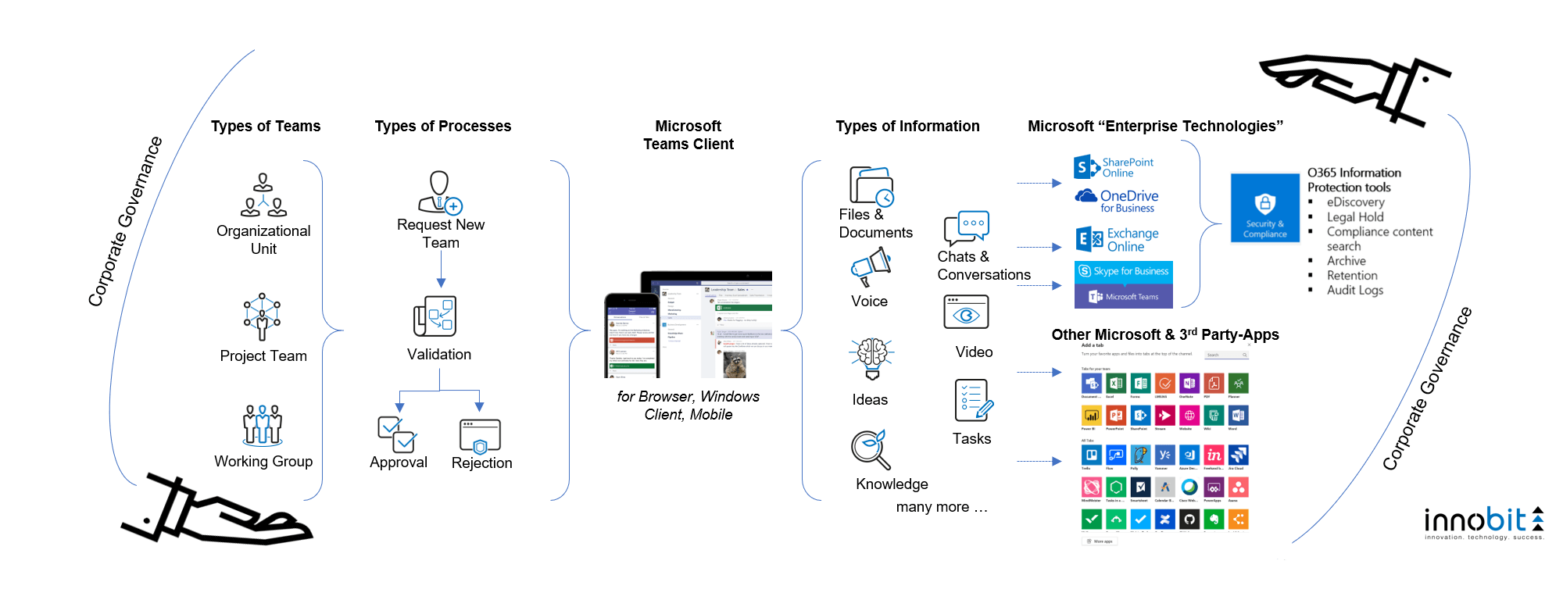
- The Microsoft Teams Platform is based on the Exchange, SharePoint and Skype for Business technologies that have been developed and established over more than a dozen years.
- All Microsoft Teams users automatically benefit from access to the functionalities of these basic technologies such as automatic document versioning, data synchronization options, video conferencing, approval workflows, media streaming etc. and the ongoing further development of these services.
- Each Microsoft Team can be labeled and classified, e.g. as "High Confidential" if it is used to work with sensitive data.
- Based on this label, Office 365 Compliance and Security can ensure that all data and documents in a Microsoft Teams with this label are automatically encrypted and secured with a retention policy (e.g. that they may only be deleted from the system after 7 years).
- This means that even if this Microsoft Team is deleted, they are stored in the background and can be retrieved via eDiscovery if required!
That's what I mean by "enterprise sexy" - a self-contained solution that also meets compliance and governance requirements, which is a key factor for many customers. In my view, this is the absolute killer argument!
What is the "new" role for SharePoint, the former only-one leader in the area of collaboration?
SharePoint continues to play a very central role in collaboration, with a focus on content- and document-centered work.
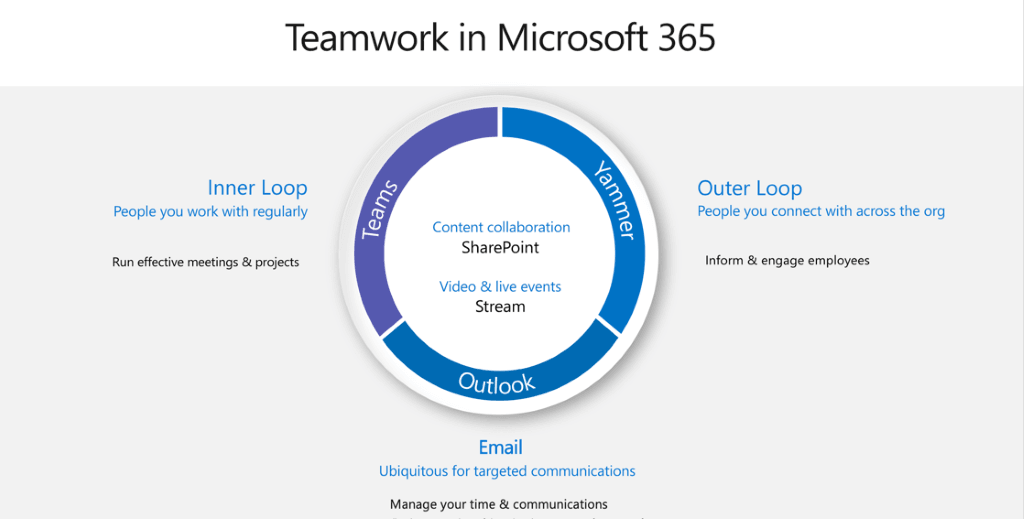
New Office 365 services such as Planner (for tasks), Stream (for videos and intelligent data analysis) and third-party applications, which are already being integrated into Microsoft Teams in large numbers, have (and will) provide further key elements in the area of collaboration.
SharePoint as Intranet & Digital Workplace
SharePoint has been strongly boosted and strengthened by investments in the intranet and digital workplace (in conjunction with other Office 365 services) for several months. In recent months, Microsoft has delivered numerous (important intranet) functionalities (e.g. hub sites, mega menu, audience targeting, UI design updates) and announced others. In the past, these could only be implemented using additional frameworks, components or in-house developments. These are important elements for an attractive, easy-to-use and personal intranet.
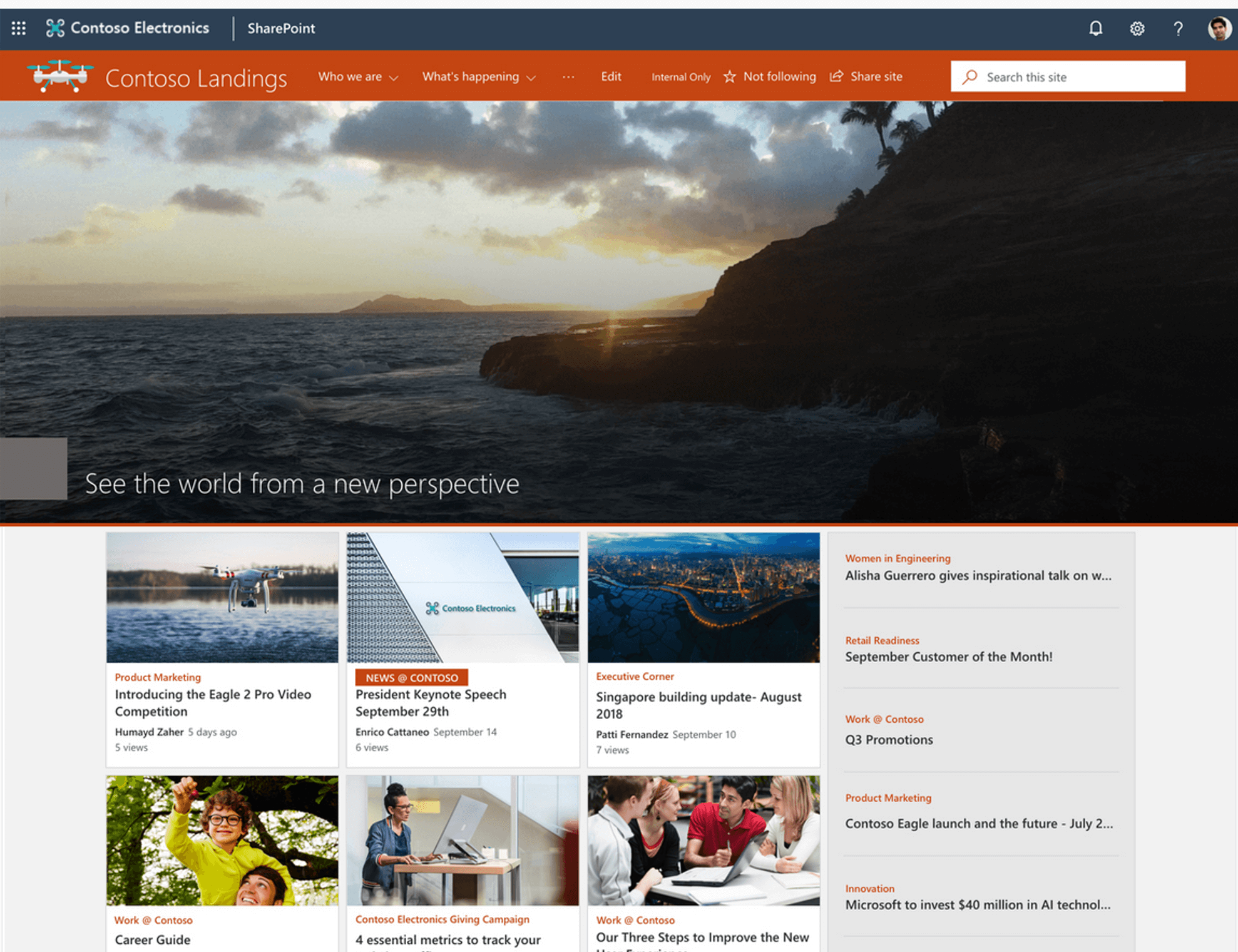
It remains exciting to see how SharePoint OOB (out of the box) will develop in the intranet sector.
Currently, the intranet area based on SharePoint is mostly supplemented and expanded with 3rd party frameworks, which offer significant added value to SharePoint Online. Important functionalities such as central (visual) management of sites and templates, simplification in the area of multilingualism, intelligent tagging, mobile apps optimized for intranets, etc., such as those offered by Powell 365 and Wizdom.
Will there be a turnaround here again in the future? Will Microsoft really be able to meet the intranet OOB requirements in the future?
"It depends" is probably the right answer. I don't believe that it can meet all the demands that we often encounter - but it will cover far more than in the past, and will please many companies and be a good solution.
Do you share this opinion? What experiences have you had with SharePoint and Microsoft Teams or third-party programs like Slack? I look forward to your comments!