


What is Microsoft Mesh?
Microsoft Mesh is a new platform from Microsoft that was presented at Ignite 2021 and is based on Azure. Users can establish digital connections in real time and share the same virtual experience.
Mesh and holoportation bring the actual person into a mixed reality environment. Currently, most virtual reality environments require users to use a specific avatar of a defined format that is representative of them. Mesh changes this usage by importing the virtual version of the factual image so that the user acts and is presented as a person. This is a photorealistic representation of the user.
Functions of Microsoft Mesh
The new technology transmits three-dimensional videos to augmented reality glasses such as the Hololens, creating a kind of mixed reality. This is mixed reality, which heralds a new era in virtual collaboration.
This was explained by Microsoft software engineer Kipman, one of the first developers of the Hololens glasses, at Ignite 2021 in February.
Microsoft wants to use Mesh to enhance digital collaboration with holograms in the future.
In future, the platform will make it possible, for example, for people sitting far away from each other to appear next to each other in a virtual way and view a 3D object together. This should give users the feeling that they are actually together during online meetings. This gives users the impression that they are in the same room, even if they are in different parts of the world.
Different device providers should also be able to use the technology.
Microsoft wants to establish the Mesh platform as an intermediary between different device providers and technologies. The 3D content should therefore be able to appear on its own Hololens glasses, for example, as well as on Facebook's Oculus glasses. The platform could thus build a bridge between virtual reality and augmented reality. With virtual reality (VR), the user is completely immersed in the digital world through special glasses with various screens in front of their eyes; with augmented reality, artificial objects are superimposed on the real world.
The Hololens AR glasses offered by Microsoft are technically advanced and are used by companies due to their high price. Apple also relies on AR, but has so far blended the digital images on the screens of its iPads and iPhones into real environments - even though, according to media reports, a new type of goggles is also in the works. Meanwhile, Facebook is buying the VR company Oculus and is already offering conversations with the new 3D avatars on the glasses.
How can companies use the mixed reality platform?
Microsoft Mesh is a platform that companies can flexibly adapt to their specific requirements. It offers almost unlimited possibilities for developers. For example, travel companies can offer virtual tours of local attractions or architectural firms can make the properties virtually accessible to interested parties in order to develop the designs together with partner companies.
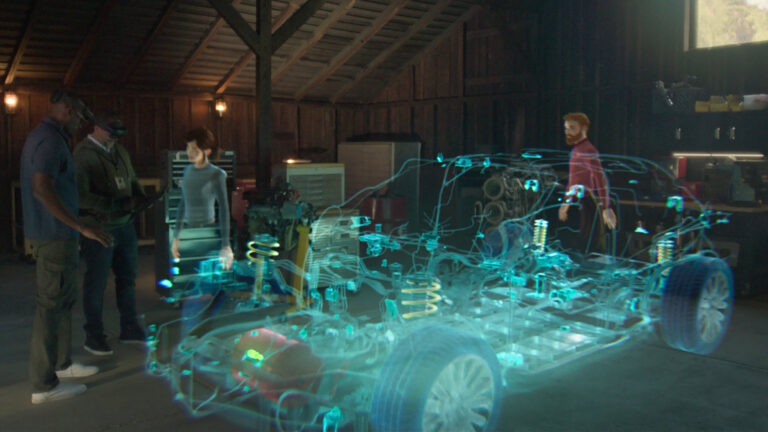
Industrial companies with production halls spread around the world can also network their employees with each other so that they can support each other optimally. Plant manufacturer SMS Group in Düsseldorf, for example, can create a three-dimensional and computer-generated image of the steelworks, through which the engineers move as avatars controlled by virtual reality goggles in order to identify construction errors even before a plant is built.
At ignite, "Pokemon Go" publisher Niantic demonstrated how the virtual characters from the popular smartphone game can appear around the user of the Hololens glasses in parks.
Integrate Microsoft Mesh into Microsoft Teams and Dynamics
The plan is to integrate Mesh into Microsoft Dynamics 365 and Microsoft Teams so that the possibilities of this platform can be optimally utilized. In addition, a large number of applications are to be developed by the global network of Microsoft partners in the future. Microsoft announced this news at Ignite 2021.
Conclusion
Microsoft wants to replace video conferences with a new type of holoconference in which the virtual conversation partners appear in real life size. The Mesh platform, which can be used to transmit three-dimensional streams to augmented reality glasses, makes this possible. Such technology should make it possible to make participants who are far away from each other in a real world appear virtual.
The approaches are promising and development is well advanced, but it will probably be a while before mixed reality technology finds its permanent place in digital corporate communication.