


News about Microsoft Teams
Microsoft Teams offers the solution, for example within a project with external parties, to provide all applications, tools and information required for processing for the parties involved in the project (internal and external) in a bundled and homogeneous manner.
This means that in addition to the familiar tools for conversation, collaboration, communication and information that are required for every project (or workgroup, or event, or ...), the necessary peripheral systems (intranet/internet site for publishing information) and necessary apps (e.g. for recording the time of external employees) are also directly integrated and made available for use - all from a single source.
This prevents users from having to constantly switch applications and spend time leaving the context.
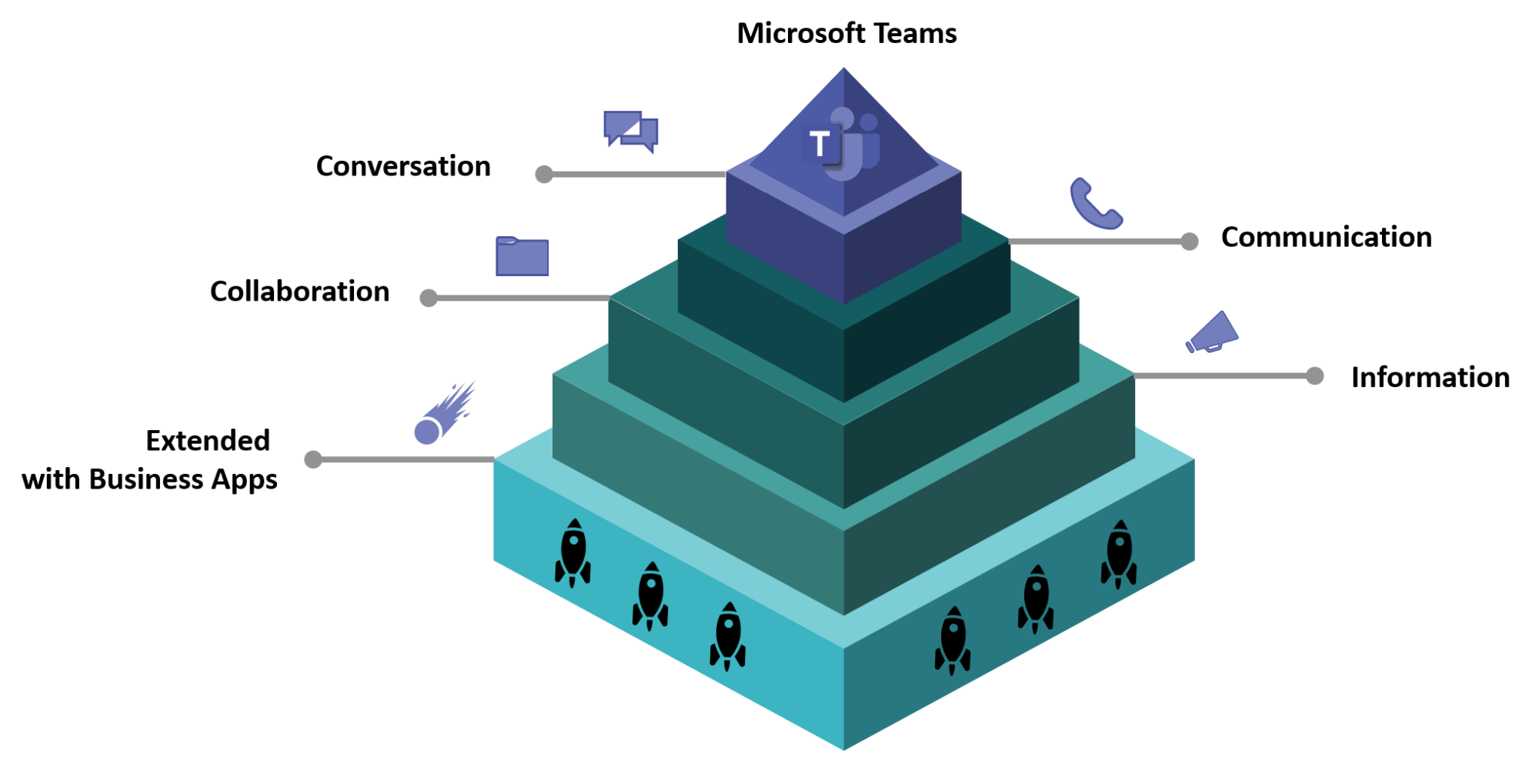
Many activities that "previously" had to be carried out in peripheral systems (including SharePoint) can now be accessed directly via Microsoft Teams. Step by step, the possibilities, e.g. within document libraries and lists in Microsoft Teams, are being expanded so that the switch to SharePoint ("Open in SharePoint" -> browser) is becoming increasingly rare.
Microsoft Teams is growing into a platform (as happened a long time ago, at least in the meantime, with SharePoint). This provides the space and location to bring together all relevant, individual applications. Regardless of whether the application comes from Microsoft, a third-party provider such as LMS365 or from the company itself as a custom app.
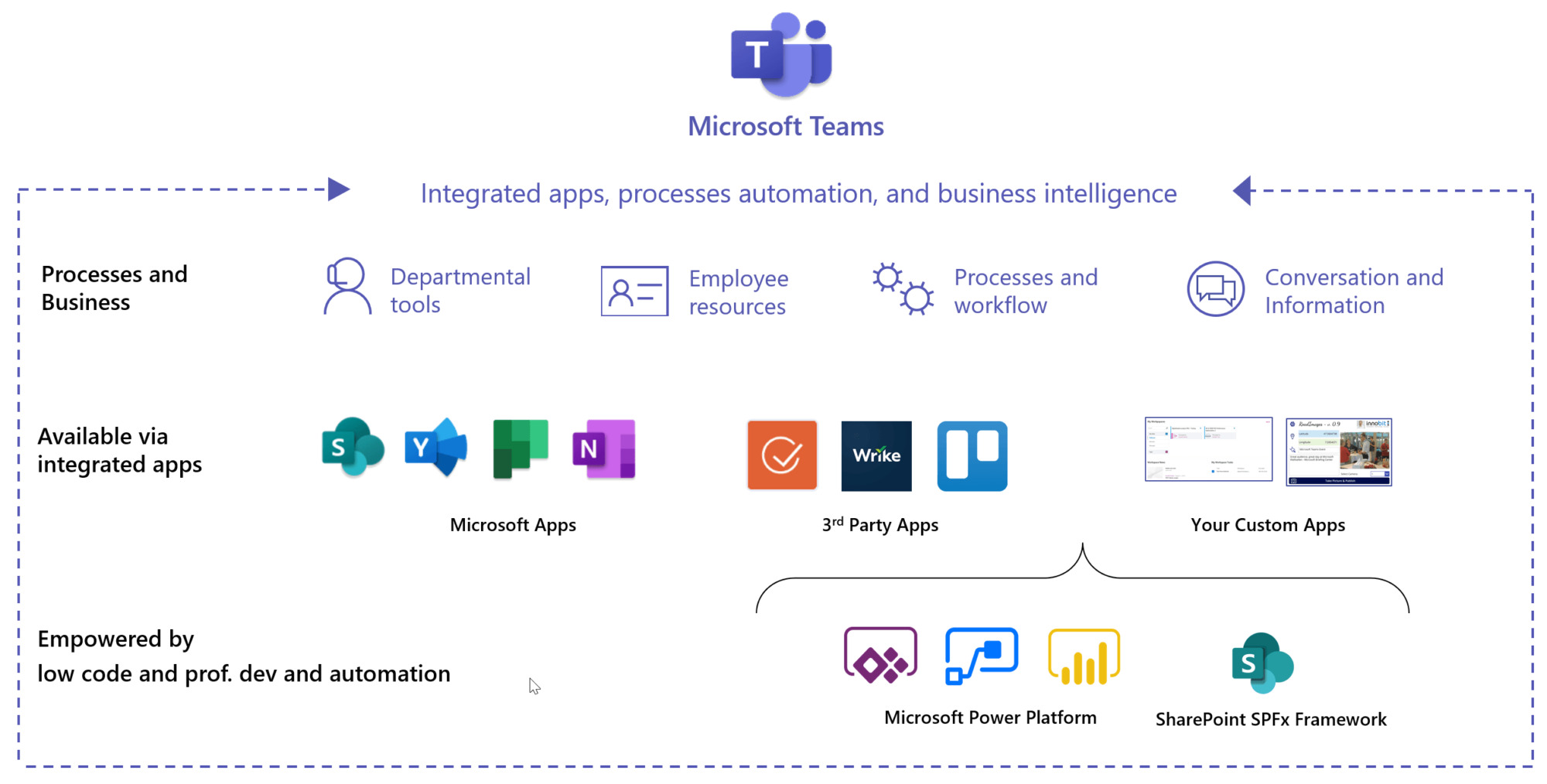
Specific apps for your company (custom apps) - i.e. apps that are not directly available via Microsoft Teams or its store - can be created and integrated.
Existing SharePoint Business Apps, which are developed on the basis of the SharePoint Framework SPFx, and thus with modern web technologies and tools, can be easily integrated into Microsoft Teams Tabs - once developed, used everywhere!
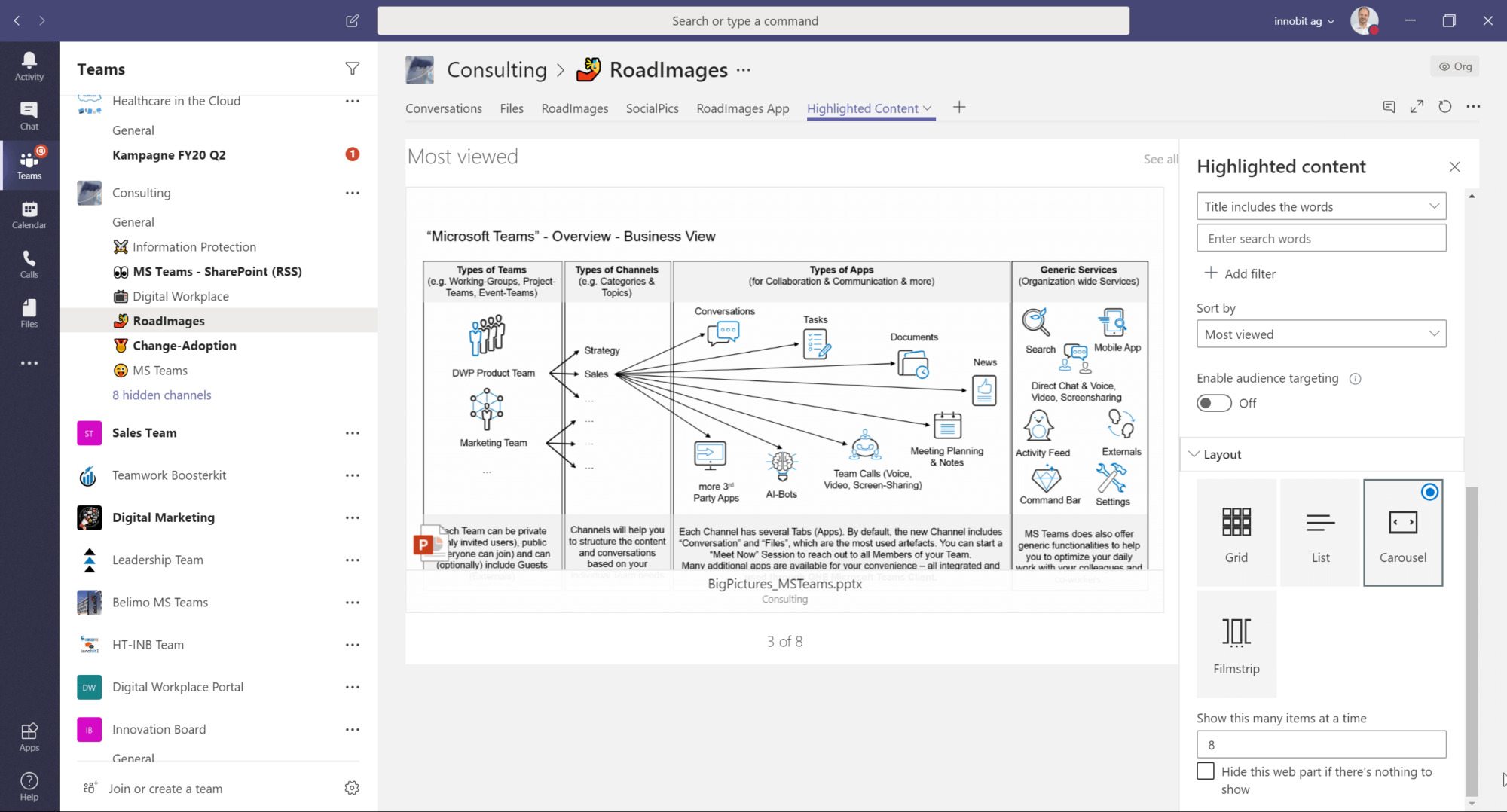
This currently applies to SharePoint and Microsoft Teams, but the journey will continue towards additional applications from the Microsoft range.
Rumor has it that the SPFx framework will soon be given a new name (and probably a new cryptic abbreviation) to reflect its future purpose:
As a central framework for the creation of future applications that can be hosted or added to Microsoft Office 365 services. We are looking forward to it!
While SPFx and Co. are the tools for software engineers, Microsoft offers a set of tools for power users in the form of the Power Platform, enabling them to work with little effort.
- Easy to create mobile applications for business users (Power Apps)
- connect these with various peripheral systems (online services, databases, MS Teams, etc.) and automate them (Power Automate, ex MS Flow)
- now also to bot-ize (Power Virtual Agent, new in preview)
- Intelligently analyze and evaluate the data used (Power BI)
The Microsoft PowerApps applications created in this way can be published directly in Microsoft Teams.
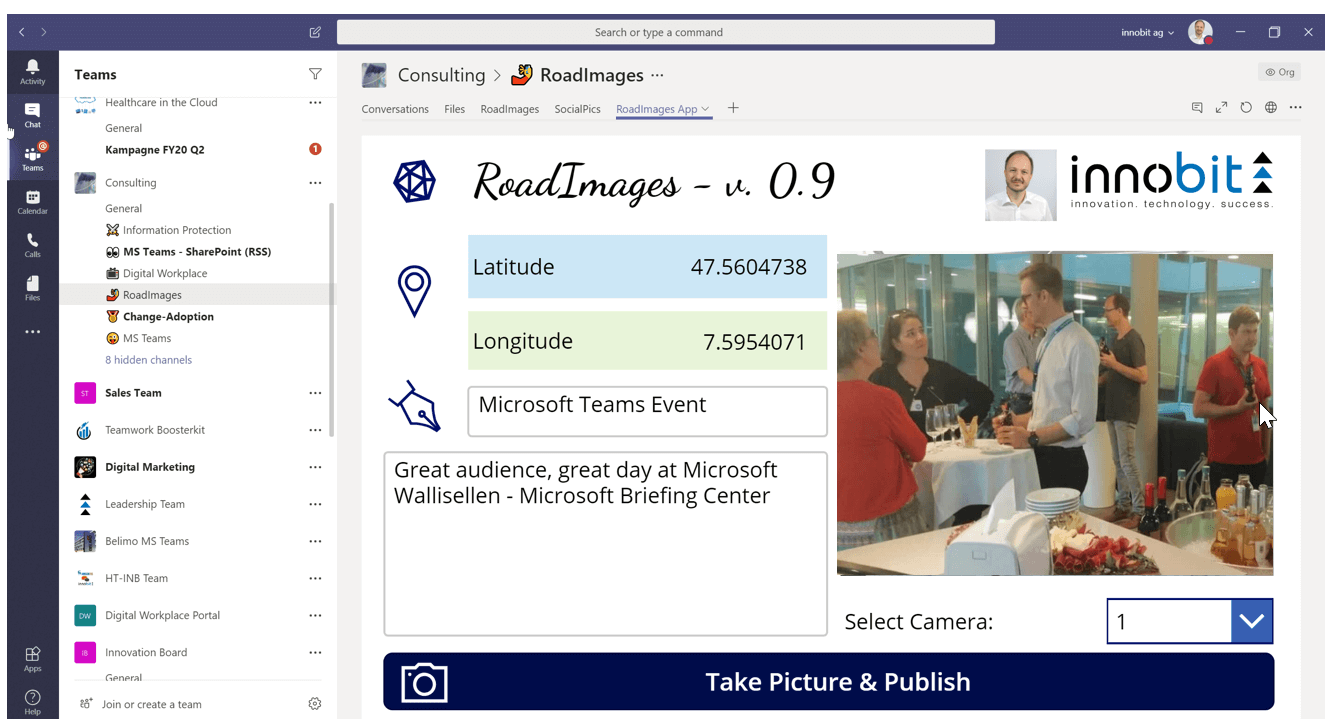
They can also be integrated into SharePoint, similar to the SPFx applications.
Thanks to the low-code platform (i.e. largely through configuration), Microsoft Teams can be usefully supplemented with business applications.
Microsoft is pushing the development of lightweight applications that can be integrated directly into the Microsoft Teams platform.
In the future, companies and departments will unite many integrated in-house or purchased applications, processes and the associated information, conversations and data in Microsoft Teams. The tools are available and the demand for integration is increasing noticeably.
innobit supports you on your way to an integrated digital workplace! The step towards an active and effective digital workplace is easier than you think. See for yourself and get in touch with us.