


It is a term that crops up again and again, also in connection with IT projects: Governance. In this article, I will briefly and concisely explain the essence of this topic in the context of IT projects.
What does governance mean and what exactly is behind it?
Governance is derived from the French "gouverner" and means "to manage, direct, educate". Often referred to as corporate governance in the context of companies, it is a "system of rules and processes by which companies are managed and directed".

The implementation of this corporate governance is intended to ensure that the central guidelines and rules of a company are adhered to. To this end, the implementation should offer control and structuring options.
Why do we need governance as part of our IT project?
"It depends" - as is so often the case! In any case, it is worth considering which corporate guidelines (in a positive sense!) can influence the IT project and should be taken into account accordingly. This is essential for the overall success of the project.
Here are some practical examples where governance plays a central role. Only if these issues are addressed correctly can an improvement through an IT project be successfully established in the long term:
Intranet (e.g. based on Office 365 and SharePoint Online)
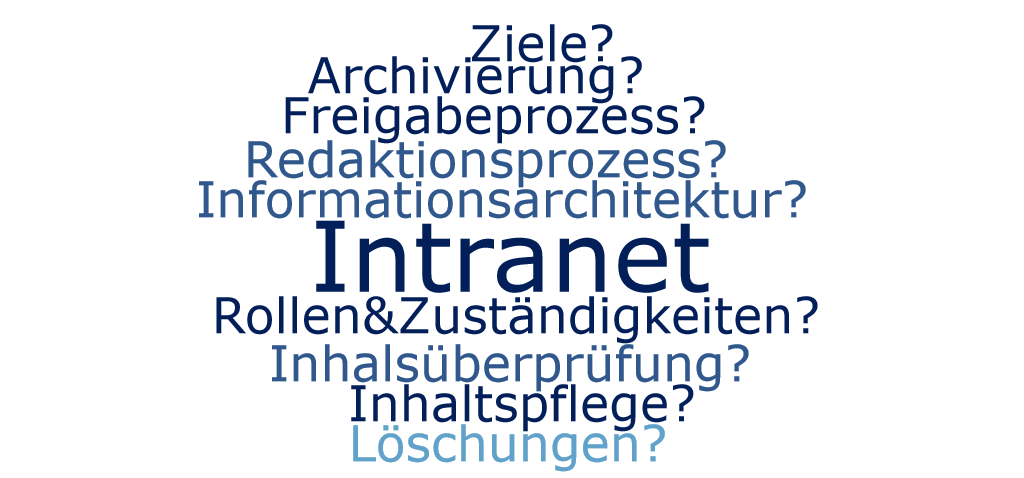
Important governance issues (exemplary):
- What are the goals of the intranet?
- What does the right information architecture look like?
- What roles and responsibilities are required?
- Who maintains the content and ensures the accuracy of the information?
- What does the editorial process look like?
- What does the content approval process look like?
- When is content removed or archived?
Possible technologies for implementation:
- Microsoft Teams
- SharePoint Online Modern Team Sites
- Yammer
Collaboration & Teamwork
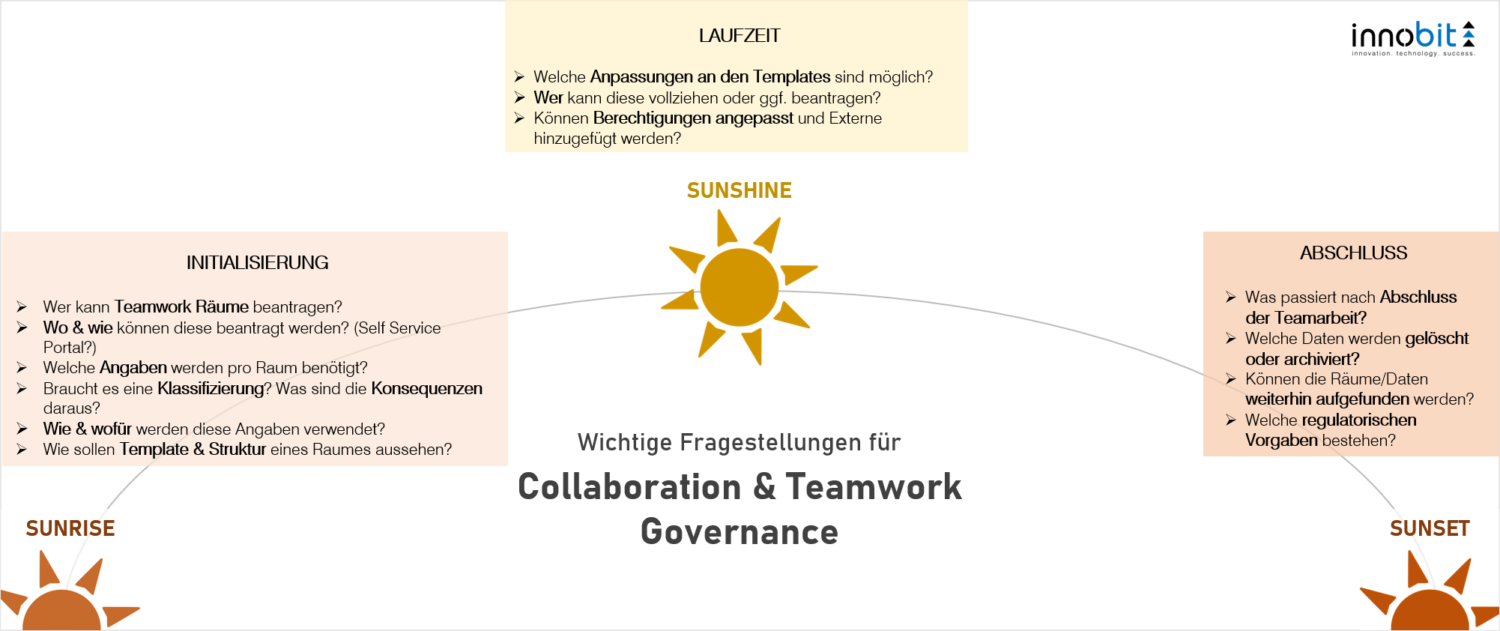
Initialization (Sunrise)
- Who can apply for Teamwork rooms?
- Where and how can these be applied for? Self Service Portal?
- What information is required per room?
- Do we need a classification? What are the consequences of this?
- How and for what purpose is this information used?
- What should the template and structure of a room look like?
Running time (Sunshine)
- What customizations to the templates are possible?
- Who can carry this out or apply for it?
- Can authorizations be adjusted and external parties added?
Closing (Sunset)
- What happens after the teamwork is completed?
- Which data is deleted or archived?
- Can the rooms/data still be found?
- What regulatory requirements exist?
Possible technologies for implementation here too:
- Microsoft Teams
- SharePoint Online Modern Team Sites
- Yammer
What can governance look like and what does it involve?
The answers to the above questions (and many more) result in various components in our projects.
The primary goal is to always relieve the end user of as much work as possible and to automate in such a way that sources of error can be minimized.

Typical components that can help with implementation:
- Automation
- Notification Processes
- Online dashboards
- Templates & Metadata
- Self Service Portal
- Governance Handbook (PDF, Online etc.)
- Adoption and training measures
- Learning Management System
This can be content governance, which (automatically) ensures that there are at least 2 active (validated) editors in the company for each piece of content on the intranet, who are asked to check and validate their content at defined intervals, e.g. with the help of notifications and a personal dashboard.

Or lifecycle governance, which accompanies the end user throughout the entire Teamwork process, from ordering a virtual room to automated creation (after approval) and archiving the data after the project has been completed. One solution for this is the Teamwork BoosterKit for Office 365.
In addition to the processes that can be controlled with IT systems, it is advisable to record in writing in a (simple, suitable) form in a governance handbook (per system, area) which specifications, objectives and guidelines are covered by the system and in what form. It can also precisely define what is not provided for in the corresponding system and is out of scope.
Are you about to implement a new intranet or do you want to successfully introduce teamwork and collaboration in the long term and want an experienced partner at your side? Do not hesitate to contact us for an initial discussion without obligation.